There are three different levels of wheel alignment technology on the market. How do you choose?
Static technology wheel alignment
A. Once the target or clamp is deformed, the data is not accurate. B. Requires strict operating Requirements and professional operating skills.For example, the clamp needs to clamp the rim or tire tightly.
Conclusion:
This kind of product requires high operation skill, which is not user-friendly for new users,and the accurate measurement life is very short
Semi-dynamic technology for wheel alignment
A. Contains some dynamic technologies B. lt requires regular calibration of the clamp and target (usually 3-4 weeks) to ensure accuracy
Conclusion: This kind of product requires frequent calibration, and the measurement will be wrong before calibration
Real dynamic wheel alignment
A. No need to do the on-road test, no need to adjust the car based on rich experience, new user can use it easily. B. Accurate measurement life is more than 15 years.
Conclusion:
Dynamic technology is currently the most advanced core technology in wheel alignment and only a few brands have this technology
Products with backward technology and low costs may cause the following problems.
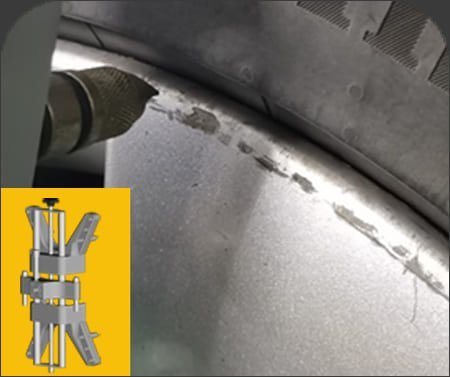
Scratching customers' rim,losing your business
Conventional wheel clamps will cause permanent damage to the rim.
This kind of damage service will lose the customers.
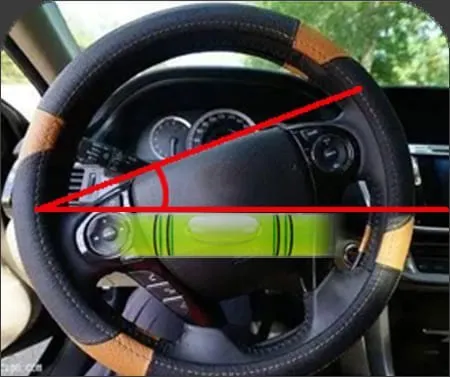
Ordinary aligners cannot adjust the sreering wheel of old cars
For old vehicles over 3 years old, the steering wheel cannot be adjusted at one time.
About 70% of vehicles on the market are more than 3 years old, and the steering wheel cannot be adjusted at one time in the traditional way.
Low-cost aligners cannot ensure good use, guarantee upgrade and maintainance
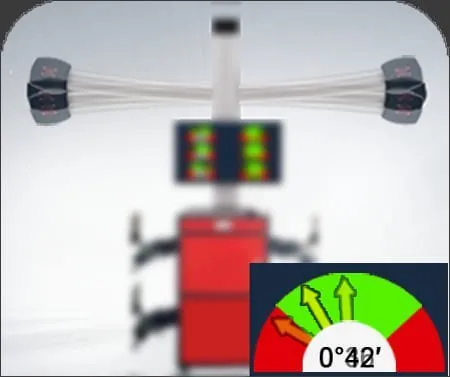
Cheap machines are with thin materials and insufficient strength of the camera beam.
The data is easy to jump and cannot be measured accurately.
The beam is easily deformed and needs to be calibrated frequently.
Most aligners cannot achieve one-stop pushing measurement
Rolling measurement is troublesome and operators always skip the step.
Skip the rolling measurement, and the measurement is not accurate.
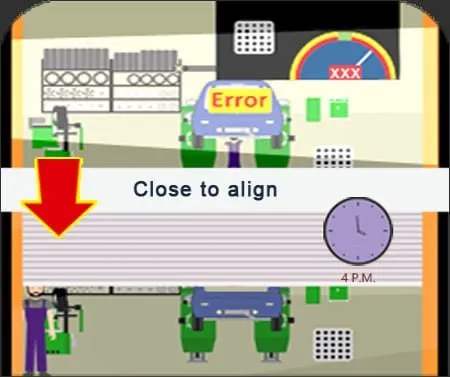
Aligners with static technology need higher time cost
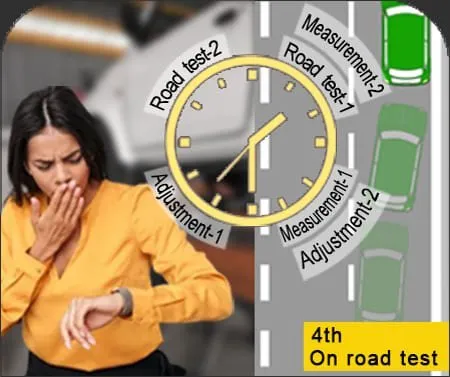
Repeatedly Road Test – Measurement-Adjustment (1.5H is required).
Users need to wait for a long time and have low satisfaction.
Most aligners cannot avoid strong light interference
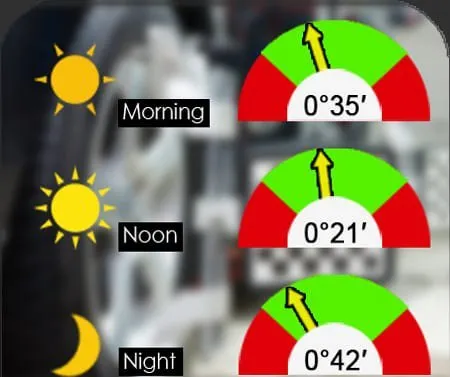
Measurement data is easily disturbed by external light.
The results of the morning, noon, and evening tests are different.
Even the door needs to be closed for wheel alignment.
Ordinary aligners have a very short accurate measurement life
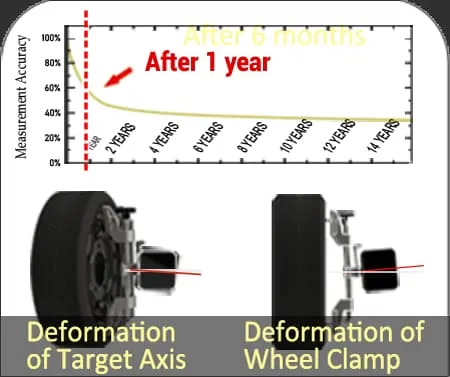
Once the clamp/target is deformed, the accuracy is greatly reduced.
Require frequent calibration.
The new machine cannot accurately measure after half a year, and the life of accurate measurement is only 6 months.
Aligners with static technology have lower selling price, but higher after-use cost
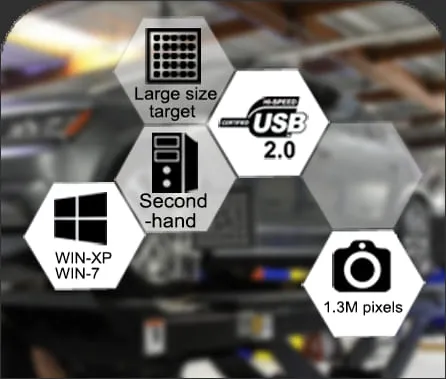
20-year-old technology with low measurement accuracy
Unable to support new Window system.
The computer only use second-hand hardware, and there is no after-sale guarantee.
How do you use a simple method to distinguish between dynamic technology and static technology of wheel alignment?
How to identify static technology and dynamic technology?
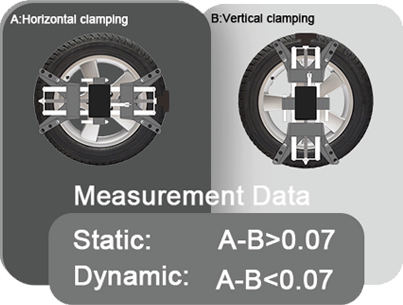
Method1
Horizontal & Vertical Clamping Comparison Method
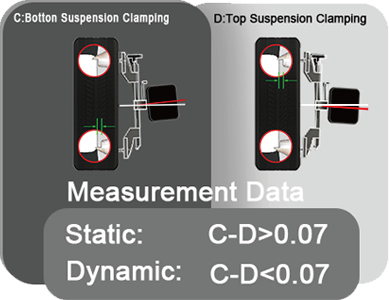
Method2
Suspension Clamping Comparison Method
*Most products on the market don’t have dynamic technology. For static technology products, the pushing measurement is only averaged and can’t effectively eliminate the errors caused by the deformation of the clamp , target or rim. The measurement error is very large. The core of dynamic technology is the super compensation system, which reconstructs the wheel state through advanced Al (artificial intelligence) and can get close to real measurement values even when the clamp, target, or rim is deformed