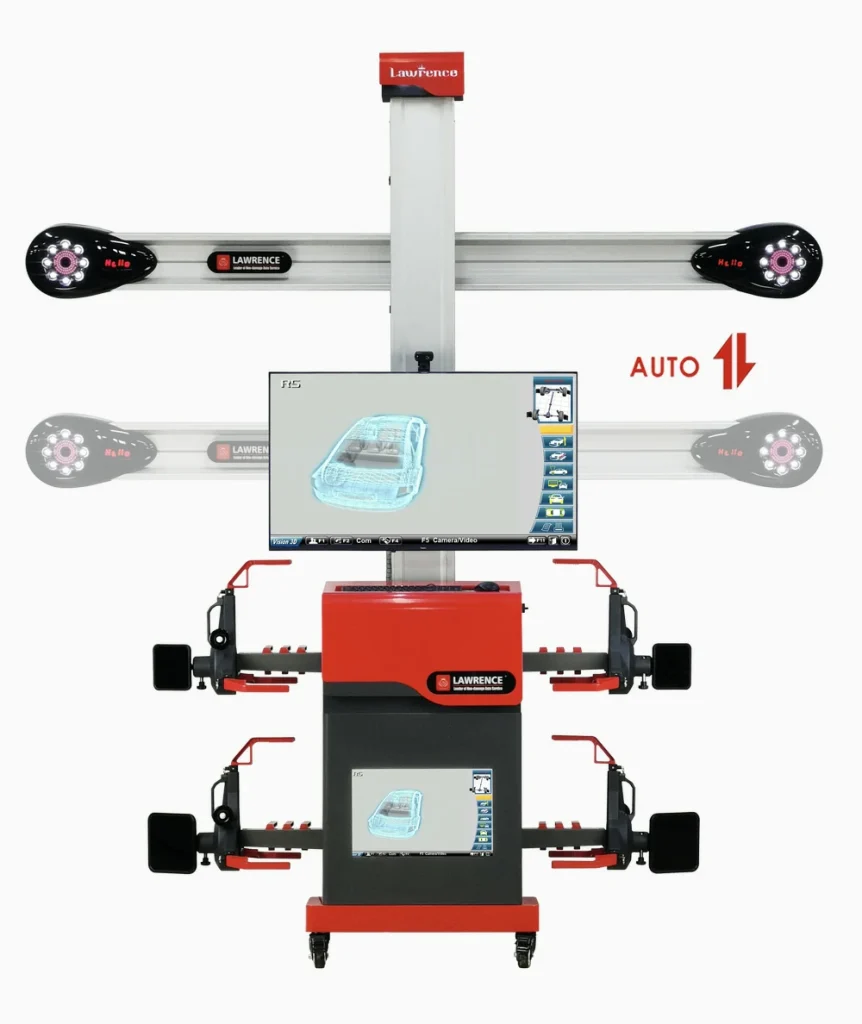
Users with experience using traditional 3D alignment systems (based on static technology) have likely faced the following pain points:
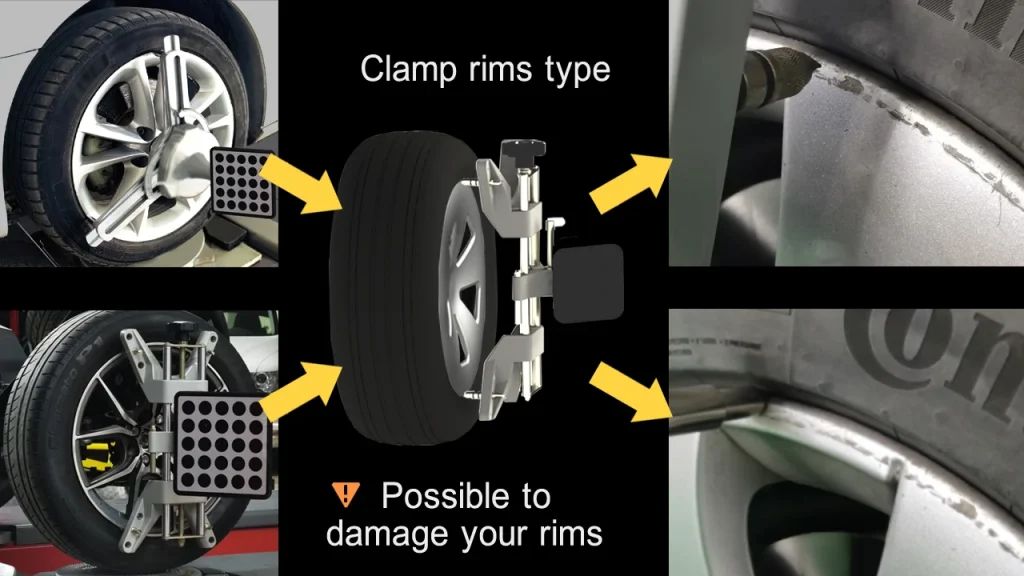
- Damaging customer rims — leads to compensation and lost clients
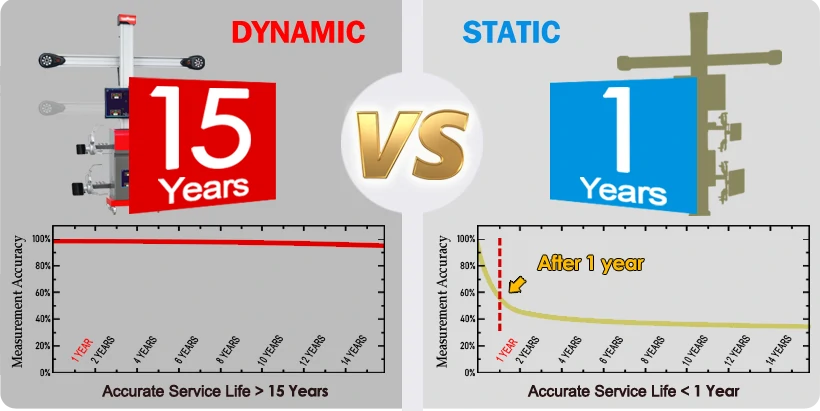
- Declining accuracy over time — typically becomes unreliable after a year
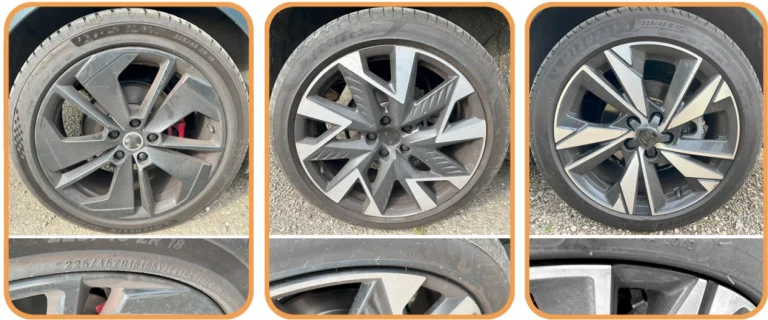
- Inability to measure accurately on uneven or deformed rims
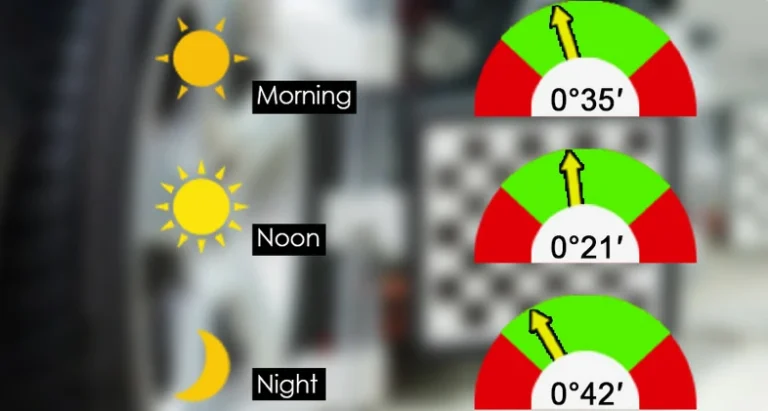
- Sunlight interference — requires closing the shop doors to align in the afternoon
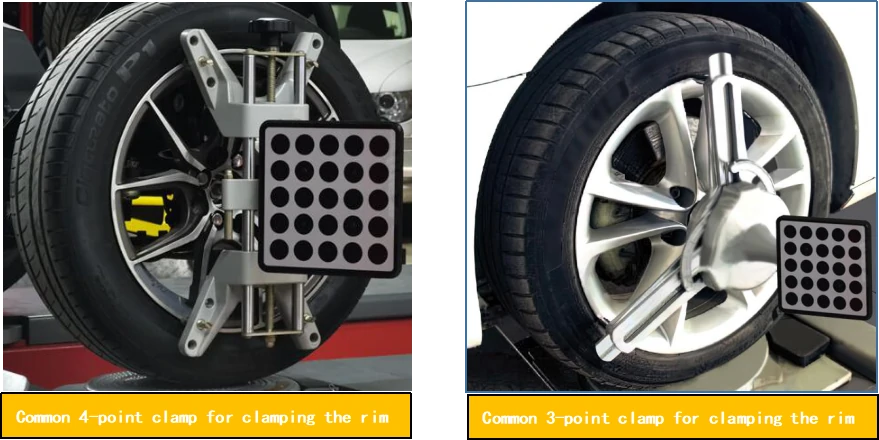
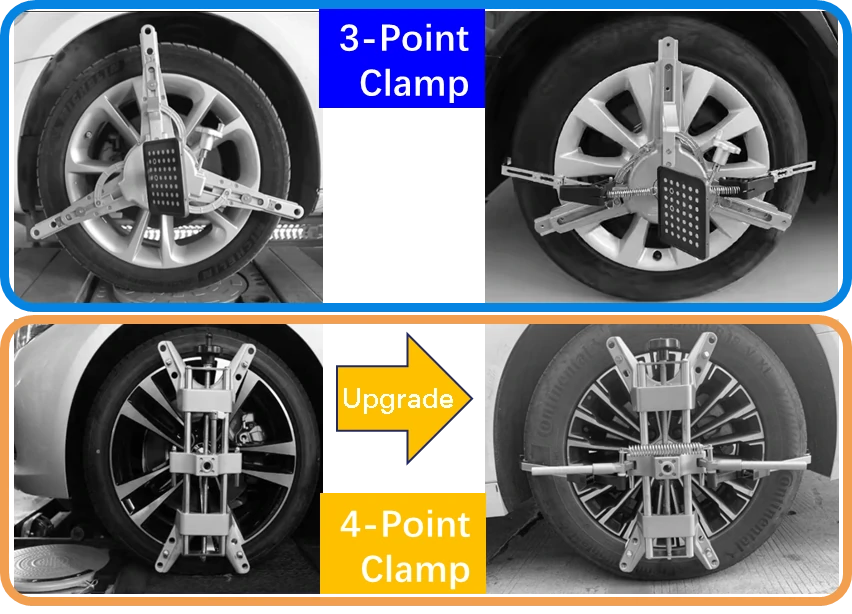
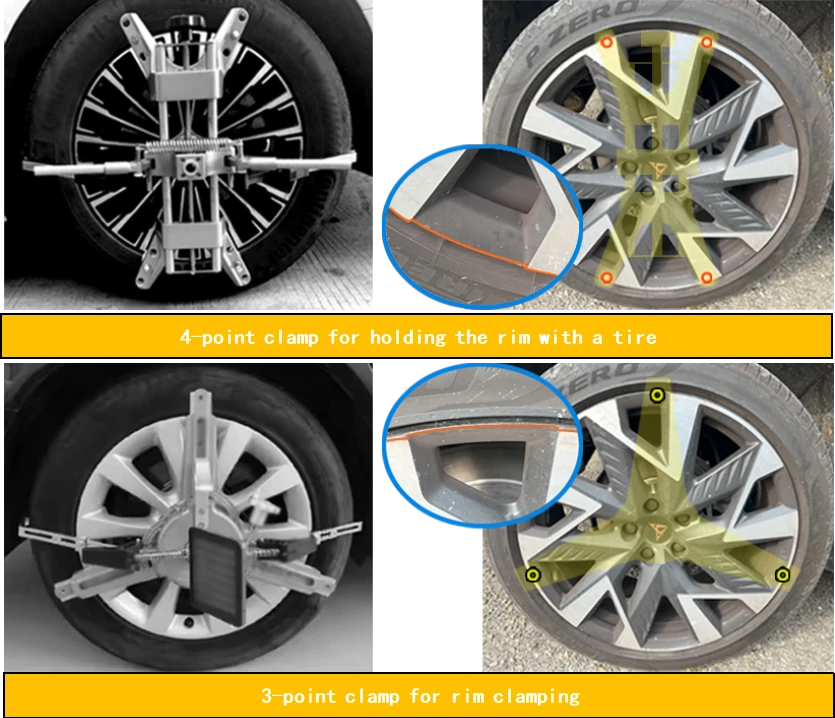
Traditional 3D aligners use rim-clamping fixtures that can scratch or dent the rim edge during operation.
This kind of clamp easily scratches or damages the rim edge.
When using this type of rim-clamping fixture, there are usually only two ways to protect the customer’s rim edge.
Method 1: Wrapping adhesive tape around the claw tips
- Advantage: Low cost
- Disadvantage: It’s very tedious — the adhesive tape needs to be reapplied after every measurement. Most customers feel uneasy when they see this kind of setup, and chances are they won’t return next time.
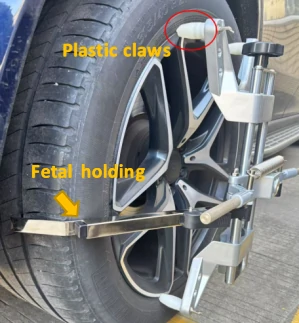
Method 2: Upgrade the clamps with plastic tips and tire grips
- Advantage:Better protection for rim edges
- Disadvantage:
- Tedious to operate, with multiple steps required
- Plastic claws wear easily and need frequent replacement
- Shallow tire grooves may not hold properly — targets can fall off
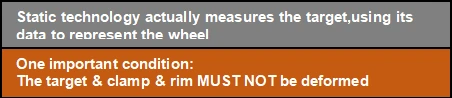
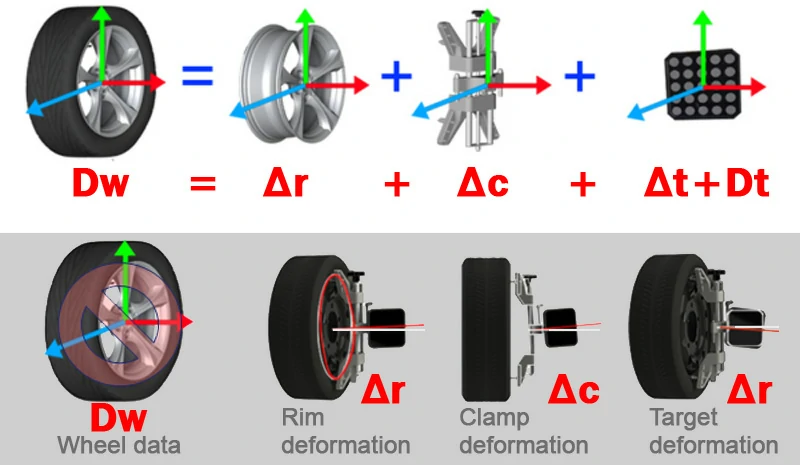
Static technology relies on high mechanical precision of the rim clamp and target. Any deformation in components will significantly increase error.
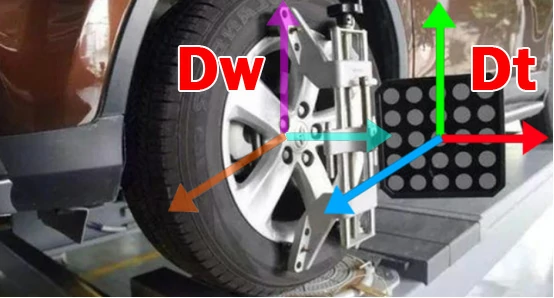
The camera doesn’t measure the wheel directly — it measures the image on the target.
This can be described as:
Dw (Wheel Data) = Dt (Target) + Δt (Target Error) + Δc (Clamp Error) + Δr (Rim Error)
As these error sources accumulate over time, measurement accuracy drops sharply — often becoming unreliable after just one year.
If clamped on a recessed area of the rim, the measurement will be highly inaccurate.
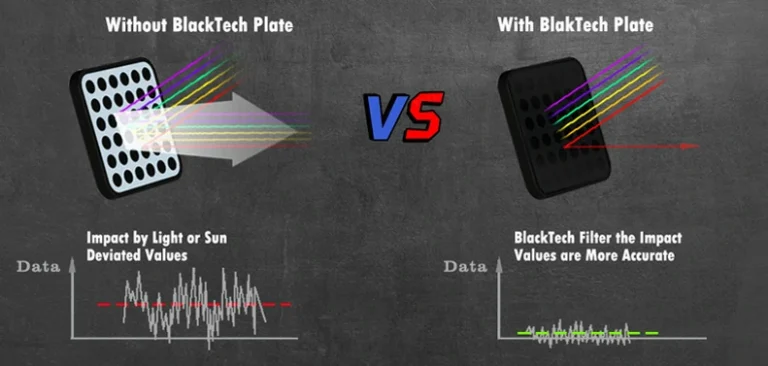
Static 3D systems rely on visual recognition. Changes in ambient light (especially direct sunlight) can interfere with accuracy or make measurement impossible.
To address this, we use black crystal panel technology that reduces light interference, providing clearer image capture and more stable results — no need to close the doors anymore.